Tuesday, April 21, 2015

Judy - Two Truisms in the Time of Toddlers #12


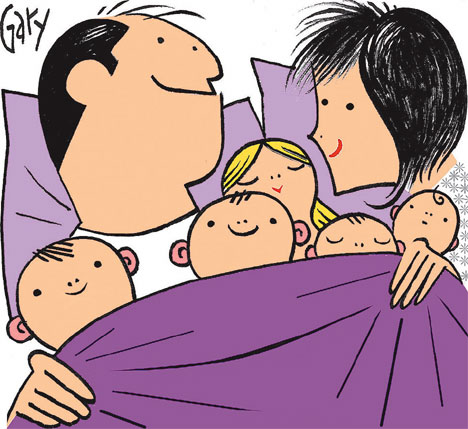
Let us assume by the toddler years, you’ve assimilated the child into the household, and life is more or less under control. This means if you have two under two (or as in my case, four under four), there are going to be times when at least two of them are crying at once. First of all, don’t panic. All you can do is calmly take care of one child at a time. It sounds too simple, but it’s true and sometimes it’s not easy.


I used to dither around both of them, not doing either one any good, until I discovered this truism. You have to make a judgement call about which one needs the attention first (exactly like triage at an accident site), then do it. Nurses call it critical thinking.


We have several pithy sayings from Lloyd’s Army days and the most pertinent for this discussion is, “Piss on the highest flame.” But in this case our response needs to be more nuanced. For an example, babies need to eat NOW (remember pregnancy?), but it takes a while to feed them. If there is something quick you can do for the older child, like put on a band-aid and kiss it better, do that. But if comforting is going to take longer or he needs more attention, start feeding the baby and then let the toddler snuggle up against you and read him a book. Just remember like a mantra: FIRST ONE, THEN THE OTHER.


There’s another truism I’d like you to put up on the refrigerator. One evening when my oldest girls were two and three and my son was a baby, I was trying to fix dinner. I was shuffling around the kitchen with a little girl hanging on each ankle, and a baby crying in the bedroom. Lloyd came home, took in the situation at a glance, and said these unforgettable words: “You don’t have to suffer like this!” Then he put both girls in their room, told them to stay there and play until we called for dinner. He put me in a rocking chair, brought me the baby to feed and said, “Now tell me what else has to be done about dinner.”


From then on I remembered these immortal words: YOU DON’T HAVE TO SUFFER LIKE THIS, and acted accordingly. I fed the baby before starting dinner, then carried him around in sling which left my hands free. I put the two girls in the bedroom and told them to stay put while I fixed dinner. Side note: it helps to have a golden husband both to help and to put things into perspective.


Several years and five children later, I was having the same dinner-hour problem when number eight was tiny. This time, using the resources at hand, I sat in the kitchen feeding the current baby while the four oldest children took turns fixing dinner under my supervision. An added bonus here is that today my kids are all great cooks.


Whenever you feel yourself start to tense up, feel overwhelmed, ready to fling children right and left, remember, “You don’t have to suffer like this!” Then figure out an alternative to the situation. Maybe you just need to step away for a while, or make them all go to their rooms, or whatever, but there are almost always alternative, non-traditional ways of doing things. (I’ll discuss other creative solutions in a later blog.)


Next time: Keep them Safe

Sunday, April 19, 2015

Let Me Do My Work / Lloyd


When Judy and I married, we moved from San Luis Obispo, CA to Philadelphia, PA and for 30 years lived far away from home. We were both the eldest children in our families, and thus had little opportunity to witness life’s pain in the personal lives of our parents or adult brothers and sisters. We had our own struggles, of course; but that was just getting through one thing or another.


Then we had children of our own, who in turn had children. At this point we began to tremble as we witnessed the pain of parenthood. And mostly it wasn’t the same as our own coming of age -- which truly means arriving at whatever age we are currently (71 years at this writing), rather events and circumstances were uniquely tailored to our children.


Perhaps we felt such overpowering empathy because we recognized the depth of their pain from our own experiences. At any rate our most recent tutoring in parenthood came as we got off the phone after speaking with one of our children about his current long-term circumstance.


We found our physical and emotional energies completely drained. It was tempting to call in sick from work so we could process all that was happening, but it wasn’t an option -- not this time. Instead I lay down for a bit before going to work.


My heart was drawn out in prayer for my son and his family when I had this clear impression, “Let me do my work.” And I found myself reviewing my own life and received a greater comprehension and more precise perspective of past significant and often overwhelming events. And then this windup, “If I have thus dealt with you and Judy, why would I withhold from your children. Let me do my work, watch and learn.”


Afterwards I sat down with Judy to go over this experience. And she remarked, “Yes, that’s very interesting, but I still hurt terribly from what I see them going through. It doesn’t go away.”


Clearly as parents we aren’t meant to stand by as idle witnesses to our children’s suffering and pain, rather we mourn with them when they mourn and comfort them as best we can.


But throughout, we also stand as witnesses of God to them and rehearse his tender mercies to us -- which helped us work through our own rough patches. Perhaps most important, we can assure our children that in those difficult times we have found meaning essential to our current happiness.


Judy and I have come to understand that in the eternal perspective, our lives and their moments are not merely a ceaseless crap shoot, but are meaningful and thought through with our welfare and long term happiness in mind.


Rick Warren said it this way: “This means God is more interested in your character than your comfort, and he's more concerned about your holiness than your happiness.”


And Jonathan G. Sandberg said to BYU students, “Again, our Heavenly Father and Savior are more interested in our growth and progression than in our comfort and convenience.”


As hard as it is for us as parents now, how terrible would it be if we had the power to intervene and understood that would cause greater damage to our children and we must withhold.

Our Heavenly Father understands that aspect of parenthood all too well. Upon hearing his only begotten son cry out "My God, my God, why hast thou forsaken me?" -- there was heard “a loud voice; and the heavens were veiled; and all the creations of God mourned; and the earth groaned; and the rocks were rent.” Still, the Father did not intervene. And we are so grateful.


Sunday, April 12, 2015

A Discharged Mental Patient Teaches Our Gospel Doctrine Class / Lloyd


This morning we were assembled in Gospel Doctrine class working through Jesus healing the daughter of a woman of Canaan (Matthew 15), when our instructor was suddenly called out to assist with a medical concern.


We were deciding what to do next when a tall black man sitting in back of the class stepped up to the front and continued leading us through the scripture. He had lots of confidence, but it was clear from his street clothes and manner that he was probably not a member of the church. He said he was Lutheran but was making the rounds of other churches today. Eventually, our teacher returned to resume her prepared lesson.


We later learned that Joe (not his real name) had recently been discharged from the maximum security, state psychiatric hospital in the area. His current domicile was a sleeping bag on the banks of a river that ran through the city, he was getting showers twice a week at the local Baptist church, and he was looking to see what assistance might be available until his Social Service benefits kicked in.


Joe volunteered that he originally went to the psych hospital from county jail because he was considered incompetent to stand trial. He said he eventually stood trial, was convicted, and served his time in several California prisons. He was sent back to the psychiatric hospital as a Mentally Disoriented Offender (MDO). In other words, California Corrections thought Joe was too dangerous to be paroled directly to the community. After several months, however, a Judge decided otherwise and paroled him to the street.


According to Wikipedia the cost of caring for patients at this state psychiatric hospital is over $200,000 per year in contrast to about $50,000 a year to house prisoners. But a man cannot be arbitrarily kept in prison after he’s served his sentence.
_________________________

comment: In previous blogs I’ve written that the goal and reality is that the majority of the patients at the state psychiatric hospital where I work will eventually be released to the community. This is the first time that a man who claimed to be from this maximum security facility has appeared at church on Sunday, certainly the first time one has stepped up to help teach the Gospel Doctrine class. The experience has demonstrated more than ever the need to be successful in treating the men at the hospital where I work.


Wednesday, April 8, 2015

Judy - Leaving Babyhood and Involving Fathers #11

Believe it or not, when babies pass their first birthday, they become even cuter and more delightful. Watching the antics of toddlers is like having a private viewing of a hilarious comedy act. And it goes on non-stop!


Sometimes, however, you might wish life during these years were a little less, um, exhilarating. At these times remember my basic motherhood motto: don’t sweat the small stuff. I knew one couple who were so worried about their baby girl getting germs that they boiled everything long after it was necessary--all her toys, eating utensils, everything. If they could have boiled her mother’s breasts before breastfeeding, they would have. Then one night the father came home and saw his fragile one-year-old daughter eating mud off his boots. When she didn’t die, or even sicken, they were able to relax and enjoy her more.


Having said that, I have to tell you about my friend, Mary. One day she was carrying her bundled baby around a store and trying to keep track of several other rambunctious children. While waiting in line at the checkout, someone asked to see her baby. She unwrapped him and discovered his feet were up and his head was down. She said ruefully, “I guess it is possible to be too casual with your children.


After you have a child, the husband/wife dynamic will naturally change, and it’s important to realize that it’s going to happen. For some people this change will be small, whereas for others it will be enormous. According to Lloyd, this change will be hardest on the husband. He says after we were such a close couple for two years, the sudden introduction of a third member, even a long-awaited and beloved third member, created a “three’s a crowd” feeling. He felt like the odd man out. As much as he loved our little daughter, he was jealous of all the time I needed to spend with her. Then he felt guilty for feeling jealous.


The best way to prepare for this is to realize it may happen and talk about it beforehand. Discuss what to do about it, and both of you try to understand how the other feels. In our case, I could have been more sensitive if I’d known how he felt, but I didn’t know until he told me years later. Also, decide together how to share caregiving activities as much as possible. Even if you breastfeed, there’s still a lot a father can do. I’ve read that often the problem is the mother doesn’t think the father can do anything as well as she can, so she doesn’t let him try, or show him how. She just nudges him out of the way and takes over. On the other hand, I’ve watched with approval as my daughters who are now mothers work together with their husbands as they both take care of their children.


Perhaps there is something Dad can do on a regular basis so he becomes part of the routine. As our first baby got older, Lloyd started taking her out for long, early-morning walks so I could sleep in a little. Talk about a win-win situation!

According to the web site www.kidspot.com/au, Researchers have shown that having dad around and involved in both positive parenting and play with todders makes a massive difference in their childhood.

An active, present, and positive father has been shown to:

  • Reduce behavioural problems in boys
  • Reduce psychological problems in girls
  • Reduce later criminal behaviour in children
  • Enhance intelligence, curiosity, reasoning, and language development
  • Decrease the incidence of children smoking (as teens)
  • Have better friendships and social skills
  • Even have better marriages (at age 33) if their relationship with Dad was good at age 16.
This is only a brief snapshot of a handful of the positive behavioural aspects when dad is involved in parenting, rather than absent or merely a spectator. Kids are happier and they function better when they have their dad involved in their lives. The earlier the involvement begins, and the more constant the involvement remains, the better the children's outcomes.”


In fact, it is often during the toddler years that the father comes into his own in the parenting department. They not only respond differently than mothers do, they also play differently and the child is the beneficiary. We used to have a psychiatrist friend who always said, “The best thing for a child is to have less mother and more father in the early years; then less father and more mother in the teen years.” Something to consider.


Sunday, April 5, 2015

Have a Baby / Lloyd

I was a graduate student at Yeshiva University on a fellowship with a living stipend that included my wife and children. We had two daughters ages two and one, and we were stretching that stipend by living with another family and providing child care and household chores for room. We also paid a share of the food budget. They had two boys ages two and six and both parents worked full time.  We planned to continue having children after I finished my schooling and after daughters were in school.


Then Judy had an acute and painful health condition over several days. We gave her a blessing in which she was encouraged to communicate with her Heavenly Father - that He had important information for her, and it was important to listen. That fast Sunday the rest of us went to Church leaving her at home in bed.

When we returned home from Church Judy said that she had had a very personal, spiritual experience - that we should not wait until after graduate school to add to our family.


You know that feeling when a member of the bishopric or stake presidency calls and asks if he can stop by to visit? And after we accept the calling he has for us, and he takes his leave, our whole life is turned upside down. Heavenly Father can do that very directly without going through anyone else. Once we realized that Heavenly Father was taking a personal interest in our having children, we found ourselves rethinking our long term family planning.


In the end we’ve had nine children interspersed with four miscarriages. There was barely time to work everyone in. All nine are married. And now we have 46 grandchildren and 4 great grandchildren. [See note below.]


In these 55 years of marriage I’ve learned that Judy is the one authorized to receive inspiration about having children. It’s been my role to sustain her in that decision. Then we work it out together. Now our children are beginning to have grandchildren. Family continues to be a vital and exciting adventure.

[Note: The years of marriage and ultimate number of children have been updated in this article to current status as of 27 July 2022 for postings on Facebook and Twitter.]

Monday, March 30, 2015

Not Ancestor Worship -- But Real-time Partnership / Lloyd


Judy and I have 39 grandchildren facing puberty, dating, courtship and marriage. We thought 6 daughters and 3 sons passing that way was extraordinary, but 39 - Wow!


When we were growing up, our parents counselled us about appropriate behavior in boy-girl dating. And we followed suit with our children.


Who would have guessed that our children would have to counsel their children about same-sex relationships as well as boy-girl chastity.


Clearly as grandparents Judy and I are seeking the blessings of God in keeping our grandchildren safe in their forward progress towards establishing their own families.  


Today at Church the Priesthood discussed the special blessings available to all those who search out the records of their ancestors.  When we also facilitate having their temple ordinances completed, they are then sealed and preserved as family for eternity. In class we watched videos and discussed the more recent emphasis on families taking advantage of computer technology within their own homes, and especially involving our tech savvy youth, in family history work.


I recall  President A. Theodore Tuttle enumerating the great promises for those engaged in family history research. (April 1980, Eternal Links that Bind)


All who diligently search realize that help comes—often from the other side of the veil. You see, they are organized and working there at least as well as we are here!


He quoted Elder Melvin J. Ballard,


The spirit and influence of your dead will guide those who are interested in finding those records. If there is anywhere on the earth anything concerning them, you will find it


and Elder John Widtsoe,  


I have the feeling … that those who give themselves with all their might and main to this work receive help from the other side, and not merely in gathering genealogies. Whoever seeks to help those on the other side receives help in return in all the affairs of life.


We are not so interested in policing internet use as we are in setting our grandchildren on fire in the enterprise of getting acquainted with their forbearers, helping to provide eternal sealing ordinances, and placing this rising generation in a position of “receiving help in all the affairs of life from those on the other side of the veil.”


One grandson at dinner said he’d like to go back in time to meet his many generations of grandparents. It seemed appropriate to assure him that he didn’t have to go back in time, simply peer through the veil and see them as they are now -- fully aware of him and doing all they are permitted in his behalf.

Elder Dallin H. Oaks commented:


When I was young, I thought . . . personal appearances were the only meaning of the ministering of angels. As a young holder of the Aaronic Priesthood, I did not think I would see an angel, and I wondered what such appearances had to do with the Aaronic Priesthood.
But the ministering of angels can also be unseen. Angelic messages can be delivered by a voice or merely by thoughts or feelings communicated to the mind. President John Taylor described “the action of the angels, or messengers of God, upon our minds, so that the heart can conceive … revelations from the eternal world.” (October 1998, “The Aaronic Priesthood and Sacrament”)
The eternal pattern of families is prescribed by God and clearly delineated in the The Family: A Proclamation to the World. By engaging in Family History Work today, our children will have personal knowledge of this pattern sealed in their minds and on their hearts. This knowledge will come through personal spiritual experience.
This is not ancestor worship. This is a real-time partnership through the veil with those who came before us in our family tree. They came at a time when the saving ordinances of the gospel weren’t universally available. We covenanted to provide these ordinances vicariously through family history and temple work, even though in our time we must endure perilous evil.
In the midst of so much disinformation, distracting influences and negative societal pressures, our children and grandchildren must draw upon resources from both sides of the veil. These strengthening resources may make all the difference in helping them successfully navigate puberty, dating, courtship and marriage.


Tuesday, March 24, 2015

Judy - Early Sleep Issues #10


Some of the best advice I ever heard was from a neonatal nurse after the birth of one of my children. She said even tiny babies need to learn, and can learn that they are able to put themselves to sleep. If we always rocked the baby until she was sound asleep, then put her down, she wouldn’t learn this for herself. This nurse said to wrap the baby tightly, feed her, burp her, then just before she was completely out, put her in her bed.


This was good advice, but on the other hand, when they are tiny, you will do anything you can to get some rest yourself, including keeping them in your bed. At first, this feels good, especially with your first one. But when they get to be a year old and wiggle all night and sleep cross-wise on the bed, it’s not fun anymore.


New parents have said the biggest problem they faced was getting enough sleep. In a previous post I mentioned the wonderful book The Happiest Baby on the Block by Harvey Karp. This book is most helpful for the first three months or when colic is a problem. After this time, an excellent book for later months is Sleeping Through the Night by Jodi A. Mindell, PhD. First, Dr. Mindell carefully explains normal sleep patterns and then some of the circumstances that cause problems, such as when parents and babies have to share the same room. She also explains that firstborns tend to have more problems than later children, and boys are more likely to have them than girls. She goes on to discuss ways to help children at different ages get to sleep using consistent rituals.


When one of our daughters had her first child, she nursed him several times a night and bedtimes were awful. When he was a toddler, she read Sleeping Through the Night and was able to follow the steps to get her son to finally sleep through the whole night in his own bed. With her second son, she began the steps outlined in the book when he was two months old, and the whole process went much easier and faster. By the time he was three months old, he was going to bed easily, and sleeping a good nine or ten hours a night. She says that book saved her sanity and recommends it to everyone within earshot.


As far as letting your older babies and even young children sleep with the parents all the time, there are two schools of thought. It’s called “co-sleeping” and I’ve seen many articles and even books extolling this practice, and the parents who do it are zealous in their belief. In my own opinion, I don’t think it’s a good idea because nobody sleeps very well (see chart above). Also, there is always the possibility of crushing a baby while you’re sleeping. And what about later children?


The other problem I have with this practice is illustrated by a Dr. Phil show. He was talking with a woman who was about to marry for the second time, and her future husband was concerned that she always let her 3-year-old son sleep with her. Dr. Phil asked her, “When do you plan to wean him from this and how do you plan to do it?” She answered defiantly, “Why do I have to wean him? Why can’t we keep on doing it?” Dr. Phil said, “Uh huh. I can see it now. Your hulking 17-year-old son comes home, throws the car keys on the nightstand and says, “Move over, Mom.” The woman was shocked. She’d foolishly not thought beyond the current age.


When you begin to have children, sleep becomes a precious commodity. But I promise you, after the first couple of months, there are ways to ensure both you and the child get enough rest. Neither of you have to be cranky all the time from lack of sleep.


Next: Toddlers - zany and loveable!


Sunday, March 15, 2015

Judy - Surviving the First Year #9


A wise woman once said, “The thing about having a baby is that from now on, you have a baby.” If you were like many of us when we were younger and tried to hold someone else’s baby, it always cried, and we never knew what to do with it. So we’d quickly give it back to its mother. You may worry that now with your own, you still won’t know what to do. Believe me, it doesn’t work like that.


One of the best things Dr. Spock said in his landmark book, Baby and Child Care, was, “Relax. You know more than you think you do.” You’ll probably find that you know enough for your own child just because you know her so well. When you are together constantly, you are familiar with every little sound and movement. Parents often say they can differentiate between the different cries for hunger, wet, tired, hurt and even cranky. And you will know what to do for each of them.


The baby’s job during the first year is to eat, sleep, grow and learn. Your job during the first year is to teach your child that the world is a good place, that it can be trusted. You teach him this by responding to his needs immediately. When he’s hungry, you feed him. When he’s wet, you change him. When he’s fussy or tired, you soothe and calm him. You hold him, talk to him, constantly stroking, touching, and looking at him. You are the one who teaches that child about love, trust, warmth and kindness; that he is part of and connected to the whole family of man. If a child learns these momentous lessons while still very young, he won’t grow up to do terrible things to other human beings because he will feel connected to them.


When babies are small, their needs are exactly the same as their wants. You can’t  “spoil” a little one. One of the saddest things I ever heard was when Lloyd’s grandmother said to me as I was holding one of my babies, “I wish I had done more of that. We were told by the experts to stick to a strict schedule and if they cried between times for feeding, to just let them cry or we’d  spoil them.” Can you imagine? Here were mothers wanting to cuddle their babies and babies in need of comfort and they were kept apart by the “experts.”


Towards the end of the first year you can begin to set limits for them, which will be in a future post on toddlers. Remember, you are the grown-up here and they depend on you completely. I get a little annoyed when I hear mothers of young children say, “But I have needs too.” Yes, you do, but being a parent means--for a while--that you have to put your children’s needs first. The mysterious thing is that when you do, you fulfill needs of your own you may not know you have. And the rewards are more than you can imagine.


Even I have to admit that sometimes your child’s infancy is not all fun and games. Someone once described a baby as an alimentary canal with a loud noise at one end and no sense of responsibility at the other. And there’s sleep problems, but that’s for next time.


Always know there are definite compensations along the way. I call compensations those fleeting moments of joy when your heart crinkles with foolish love for that baby. And then they grow up in the blink of an eye, and all you’re left with is the memories of those moments.


Next: Sleep Issues

Tuesday, March 10, 2015

Judy: Living with a Newborn #8


After coming home from the hospital with a new baby, I found that if I did absolutely nothing except sit in a chair and breastfeed for two weeks, I could bounce back and begin to feel better. But if I started doing things, like meals, a little laundry, a little clutter control, whatever, it took me at least two months to recover.


The catch here, of course, is that with other children around, how do you do nothing for two weeks? By shamelessly asking for and accepting any and all help available! Call on your mother, sister, other relatives, in-laws, friends, neighbors, and countrymen--anybody willing to lend a hand. When well-meaning friends ask, “Is there anything I can do?” smile wistfully and say, “Actually, there is some laundry...”


Then, of course, there are usually husbands. The ideal situation is for him to get some time off work to take over at home. Encourage him to take some family leave time or paternity leave, or whatever they call it. But I have to tell you a story. Once I went to visit a new mother after she had been home from the hospital two days with her fourth child. I found her scurrying around the kitchen, looking like death warmed over as she tried to boil a million baby bottles, fill them with formula, and fix dinner for the family all at once. Her husband, who had taken some time off work “to help out at home,” was sitting in the living room with the other kids watching TV.


Did I blame him? Well, yes, at first. Afterwards, however, I realized that he probably didn’t know what to do and didn’t realize how his wife felt because she didn’t tell him. So, open your mouth and ask. Tell people exactly what you need and if necessary, how to do it.


If there’s no handy husband available, lean on the other children. The problem here is that as soon as they are big enough to be a help more than a hindrance, they go to school. Still, even little ones can fetch and carry. Bottom line is take any help you can get and be ruthless about doing nothing except sit and feed  your baby. Don’t get the guilts for all the stuff that’s not getting done.


It will all still be there when you are ready to face it, I promise. The first couple weeks of this baby’s life will not be there and neither will your health if you blow it. My kids often heard me quote the last lines of the poem, “Song for a Fifth Child” by Ruth Hulburt Hamilton:


The cleaning and scrubbing will wait till tomorrow,
For children grow up, as I’ve learned to my sorrow.
So quiet down, cobwebs. Dust go to sleep.
I’m rocking my baby and babies don’t keep.


I had a dear friend who was feeling pretty good after being home a few days so she decided to do some ironing (back in the days when people still did that). She thought she was being careful because she sat on a stool. But after about an hour she began hemorrhaging, had to be taken to the emergency room in an ambulance, and was seriously ill for several weeks. I’m not kidding about this one--take it easy!


Another reason you need to do as little as possible is that you’re going to be tired (I’m talking bone-weary, sleep-deprived, psychosis here) for three reasons: first, your body is recovering from the trauma of giving birth, second, your body is readjusting to it’s non-pregnant state with hormonal fluctuations, and third, you won’t sleep at night. Add to this a constantly crying child and you’ll be ready to suck your thumb and crawl back into the womb yourself.


One morning at church I looked around and saw all five couples with new babies dozing in their seats. I told people I used to faint a lot to get some rest. Once I even fell asleep at a doctor's appointment, laying on my back with my feet in the stirrups. The nurse said she’d never seen that before.


If your baby cries all the time (and some of the little stinkers do), check with the doctor about a possible physical cause. If the pediatrician says there’s nothing wrong, or “it’s just colic,” you may have to grin and bear it for two or three months. No one seems to know what causes colic, therefore there is no medication to “cure” it. The main theories include intestinal pain due to allergies or gas. Here is a good website for helpful suggestions: http://www.babycenter.com/0_colic-how-to-cope_1369745.bc


One of the best books I’ve seen about soothing a crying baby is Harvey Karp’s The Happiest Baby on the Block. He outlines the 5 S’s: swaddle, side, swing, shush, and suck. I often give this book at baby showers and it’s not an exaggeration to say I’ve seen this method do miracles.


Then there is the old stand-by of a ride in a car. I heard that some desperate father somewhere invented a device you could attach to the crib which makes it move gently, like a car in motion, and at the same time makes a noise like a car engine. You may reach a point where you’ve tried everything and nothing works. If this is the case, the best thing you can do for both of you, is to leave the baby with a sitter and take a nap, with earphones, preferably once a day. Believe me, someday the crying will no longer be so constant, and your baby will get her days and nights in balance with the rest of the world.


When one woman’s baby was about a month old, her husband woke up and groaned, “I only got five hours of sleep last night.” At the same time the mother sang out happily, “I got five whole hours of sleep last night!” Everything is relative.


Next time: The First Year

Featured Post

Have a Baby / Lloyd

I was a graduate student at Yeshiva University on a fellowship with a living stipend that included my wife and children. We had two daughter...