Tuesday, April 16, 2013

Videos of High School Students Receiving Mission Calls -- Background Details / Lloyd


The following video is "A compilation of pictures and videos of the 2012 Davis High School graduates (Kaysville, Utah) who have decided to serve LDS missions."

Videos from other High Schools are found on YouTube at:

Background Details to the Videos
Recently many of us have viewed on the Internet and Television videos of young men and women reading letters from the Church of Jesus Christ of Latter-day Saints (Mormon) calling them to serve missions with assignments world-wide.  

This is the first in our lifetime that Mormon missionaries have received calls to begin their missions immediately upon graduation from High School and as early as their 18th (Young Men) or 19th (Young Women) birthdays.

On 6 October 2012 during a televised General Conference of the Church, President Thomas S. Monson announced without prior notice lower age requirements for missionary service. Following that conference session a press conference was held to give background, clarification and answer questions from a surprised media.


An enthusiastic response among young men and women to the change in age requirements was immediate and achieved a current constant rate of 1,400 missionaries called per week, compared to 600 per week previously.


Administrative planning and support to new missionaries has to be as dynamic as their response to serve.


Angola Luanda
Argentina Comodoro Rivadavia
Argentina Posadas
Arizona Gilbert
Arizona Scottsdale
Australia Sydney North
Bolivia Santa Cruz North
Botswana Gaborone
Brazil Curitiba South
Brazil Fortaleza East
Brazil Juiz de Fora
Brazil Natal
Brazil Piracicaba
Brazil Santos
Brazil São Paulo West
California Bakersfield
California Irvine
California Rancho Cucamonga
Chile Santiago South
Colorado Fort Collins
Ecuador Guayaquil West
Ecuador Quito North
El Salvador San Salvador East
Georgia Macon
Ghana Accra West
Guatemala Cobán
Honduras San Pedro Sula West
Idaho Nampa
Idaho Twin Falls
Illinois Chicago West
Japan Tokyo South
Kansas Wichita
Korea Seoul South
Liberia Monrovia
México Cancún
México Ciudad Juarez
México Ciudad Obregón
México México City Chalco
México Pachuca
México Queretaro
México Reynosa
México Saltillo
New Zealand Hamilton
Nigeria Benin City
Ohio Cincinnati
Oregon Salem
Papua New Guinea Lae
Perú Huancayo
Perú Iquitos
Philippines Cavite
Philippines Cebu East
Philippines Legaspi
Philippines Urdaneta
Ukraine L'viv
Utah Salt Lake City East
Virginia Chesapeake
Washington Federal Way
Washington Vancouver

  • How many missionaries does the Church have serving currently? -- 64,373
  • What is the average number of missionaries being called per week now?  -- 1,400 per week since 1 January 2013
  • What is the current percentage of elders and sisters being called -- For calls made since 1 January 2013, 57% are elders, 36% are sisters, and 7% are seniors.

Commenting on these official Church statistics , one observer suggests:

The Church may call as many as 70,000 missionaries in 2013 if it continues to perpetuate the average of 1,400 missionary applications per week for the entire year. This may result in the Church surpassing 100,000 missionaries serving by late 2013 or early 2014 and necessitate the organization of dozens of additional missions for 2014.


After all the numbers are analyzed, the extraordinary value for the young men and women who accept the call to serve and also for those who receive them is inestimable.

We know this from our experience. I served a mission in Guatemala; Judy and I have brothers who served in Brazil - Japan - South Africa - Spain. Our sons and daughters, including husbands & wives, served missions in Argentina(x2) - Brazil - Germany(x2) - Tacoma, WA - Spain(x2) - Ghana. These have been life defining.  And our first grandchild receives his call this summer. This is exciting.

Saturday, April 13, 2013

Favorite Family Movies / Judy


It's time for more movies! You might be more aware of these, unlike the last batch, but this is a list of movies that are just plain fun and enjoyable.


In no particular order, some personal and family

favorites


1. Enchanted April

We'll start with my very own favorite. It's about four women in London in the 1920's who rent a villa in Italy for the month of April and how it changes their lives and also the men in their lives. One critic said it was like taking a mini vacation in Italy. Some people say it's too slow, but that turns out to be part of its charm.


2. The Butcher's Wife

This one is about a clairvoyant who lives with her grandmother on an isolated island. She sees a butcher from New York who is there on vacation, and marries him because she thinks she's seen him in her dreams. They return to the city and she influences everyone around her, sometimes in spite of themselves, and in turn finds the real man of her dreams. For some reason it didn't go over too well with the critics, but it's one of our family's faves.


3. Noises Off

For anyone who's ever been in a play or has seen one, this is for you. We follow a traveling theater group from final rehearsals to opening night to the tour. Eventually, what is going on backstage is much more exciting than what's happening out front. It is hilarious!


4. Tortilla Soup

A family drama that's also about food. A widowed Mexican-American chef has three adult daughters who are trying to find their own way while staying connected to the family. The story is delightful, but the scenes about meal preparation are stunning. You go looking for something to eat immediately.


5. Waking Ned Devine

An Irish gem that I think you'll love. Ned has just won the big Irish lottery, but it's such a shock that he dies. His friends decide to fool the lottery investigator so they can all share the money, in Ned's name of course.


6. Return to Me

When we showed this to my dad, he said, "I guess they can make movies like they used to." I hesitate to tell the plot because it's sort of unbelievable, but the acting, especially by the supporting characters,  is  wonderful and makes you believe it. A happily married woman loses her life in a car accident and her heart is transplanted into a young woman who would have died without it. When she meets the widower, they fall for each other at first sight. (See what I mean about the plot?) Still, it's funny and charming and another one I highly recommend.


7. Joe Vs. the Volcano

I'm afraid Tom Hanks thinks of this as one of his failures, but we absolutely love it. It's fun and a little silly, but it's also got some great lines and images. It's about a working stiff who hates his job. Then he learns he only has a short time to live. Adventure ensues.


Saturday, April 6, 2013

The Essential Hard Edge in My Life / Lloyd


Hard-Edge Painting (June Harwood, Bull's Eye, 1965)


 Abstract Expressionism (Jane Frank, Crags and Crevices, 1961)

The writers of two articles in the magazine Art in America, Feb '09, expressed concerns that artistic truth has been seriously compromised in their areas of expertise. Their comments illustrate the need and difficulty of identifying a reliable standard of truth in our life.

I have found such a standard in the Gospel of Jesus Christ found in The Church of Jesus Christ of Latter-day Saints, and you can view the most recent General Conference of the Church via the internet Here.
honest brokers

In "Revision Number Five: Quality," Dave Hickey notes that art critics have failed to address the quality of art pieces, to be "honest brokers" regarding certain artistic verities. They subordinate their training and professional insights to market forces--whatever the public will pay, that is the value.

Why? Because they don't want to offend art dealers and thereby lose their advertising profits. Consequently, art critics have failed to educate the public about artistic merit. In the current economic down turn, when art buyers especially need to understand cultural and economic value, the "great art is diminished by the junk that surrounds it." The only way to shakeout the junk is for art critics to expose themselves to financial risk and take a stand on value.

reportorial truth

In "The New Real: Photoids," Peter Plagens points out that ". . . pre-digitalization, there was in force a bedrock assumption that what appeared in a photograph once materially existed in front of the lens of the camera that took the picture. In theory, the images in photographs existed before they were taken."

But now with digitalization, "The surface of the art that the machine produces can be printed so precisely that there's no trace of retouching. . . Nowadays, it's not just possible, but increasingly standard operating procedure, for some photographs to be majorly fictive while maintaining their customary insinuations of reportorial truth."

[To better appreciate the significance of Plagens' assertion that we can no longer just accept photography as truth in the traditional sense, consider the Dartmouth College study of mischief done in its exhibit at "Photo Tampering Through History."]

This concern about truth is not just academic. I feel uncomfortable and incomplete unless I am in contact with a "hard edge." I can't systematically define what I mean by a "hard edge;" it's just the term that seems to describe what I feel when I find something I trust.  Clearly David Hickey and Peter Plagens feel that important truths in their lives have been greatly diminished, and that makes them uncomfortable.

hard-edge feelings that help me
keep oriented

Here are examples of a "hard-edge" that bring comfort to my life.

At night I can sense Judy's presence just across from me; and without having to touch and disturb her rest, I can feel her warmth and reality. When I'm in a dream state (not always pleasant), Judy's presence is an important mooring to reality.

I can place my back up against the firm sea wall and hear and feel the wonderful continuity of waves rolling in and receding, rolling in and receding — punctuated by gulls and little kids running and laughing up and down the beach.

When I've passed through the veil in the temple I find Judy and other family and friends to hug in greeting. And in the Celestial Room of the Washington DC Temple I walk round the room touching through soft slippers the design sculpted in the carpet. This physical hugging and touching seem to strengthen my contact to the spiritual dimension of my temple experience.

I have come to recognize promptings, feelings whispered so quietly but so surely. After 68 years of ignoring some and heeding others and having to deal with the consequence of each choice, I've come to recognize their certainty.

When I was an in-patient on the psychiatric ward of our community hospital, remembering the hard-edge feelings listed above got me through the especially hard times. They were the realities I used in working my way back to productive functioning.

hard-edge painting versus
abstract expressionism

Just before writing this post I searched "hard edge" on the internet and learned that Hard-Edge painting was a style attributed to certain painters in California beginning in the late 1950's. It was a reaction to the abstract expressionism that was dominant in New York and featured sharp delineation of color and shapes. You can see examples of the two styles above.

I find abstract impressionism more interesting but feel a greater sense of certainty in hard-edged painting. Each week on Sunday I find it helpful to renew my focus on family and basic values and beliefs, the certainties in my life, before meeting the more abstract and challenging demands at work.

Friday, March 8, 2013

Neal A Maxell on a Universe Pulsating with Divine Purpose & Life / Lloyd


Elder Neal A. Maxwell through videos & quotes invites us to consider words of ancient prophets juxtaposed with the baffling scope of the universe.

As we consider the vastness of God's creations, it is significant to consider that we are the sole purpose of His existence: "to bring to pass the immortality and eternal life of man."


We cannot possibly appreciate the majesty and the complexity of the ongoing duties of galactic governance that rest upon Jesus Christ; but as the Shepherd, He did not merely create other worlds and then abandon them.
Even so, as the omniscient Creator, He does not rush to tell us things about these other worlds that we neither need to know nor could appreciate. 
Instead, what He tells us is what we need to know, including that which can reinforce us in our spiritual determination.
As immensely important as the truths about the physical universe are, they are not now that which we most need to know. 
Nephi had the proper sense of proportion: "I know that [God] loveth his children; nevertheless, I do not know the meaning of all things.
Does not God even describe the immensity of the galaxies, the planets, and the stars, in lovable as well as understandable ways? 
Though He might do so in sweeping technical and astrophysical terms that we could not even understand, He asks us to think in a familial way about faithful Abraham's posterity one day being as numberless as the stars in heaven. 
What is presented is beckoning rather than overwhelming.
Further, we are asked to view the cosmos as evidence of "God moving in his majesty and power," attesting that, in God's work, souls matter most!
God's work is unimaginably difficult work. It is very real, very relentless and repetitive. His course is one eternal round, He has said. 
But His work is also His glory. And we, His children everywhere, are His work. We are at the center of His purposes and concerns. "We are the people of his pasture, and the sheep of his hand."
Moreover, in the Pearl of Great Price, we read that "millions of earths" would be just a beginning to the number of the Lord's creations. 
However, as Enoch beheld them "stretched out" into space, his awe did not spring from the numerical or spatial dimensions of God's creations but, rather, from the implications underlying those numbers.
Enoch responded movingly and with awe—but it was over God's attributes, not His "acreage": "Thou art there [actuality], . . . thou art just; thou art merciful and kind forever [personality]"!


We cannot determine by using radio telescopes . . .  that there is a plan of salvation operating in the universe, helpful as radio telescopes are for astrophysical purposes. Salvational truths are obtainable only by revelation.
Please Note: All italics in text above are emphasis added - Lloyd

Wednesday, March 6, 2013

My Dad Liberated A Nazi Concentration Camp / Judy

While Lloyd is working on the Garden of Eden, I'd like to go into the more recent past. You may have seen the current news item about a study that revealed an even more staggering scope of the Holocaust.

The lead editors on the project said as they began to document all the concentration camps in Europe, they thought there were about 7,000 of them. (I read an old article that said there were 1500.) Then they began their research and soon the number went to 11,000, then an astonishing 20,00. Finally, they have cataloged about 42,500 such camps! They include prisoner-of-war camps, killing centers, brothels, and forced labor camps.

The article said, "What they have found so far has shocked even scholars steeped in the history of the Holocaust."

I was reminded about the part in my Dad's story where, as an Infantry lieutenant in World War II, he came across one small concentration camp late in the war. Here then is what my father, Lieut. H.G. Wight, related:

We resumed driving through Germany, fighting our way through woods and towns. One day we were advancing slowly through a section of forest against moderate resistance when the firing slowed, then stopped completely. The Germans in front of us seemed to evaporate. At first we suspected a trap and continued to advance cautiously. After about an hour of marching through silence, we came upon something that looked like a prison camp with high walls, guard towers and barbed wire. It turned out to be a small concentration camp consisting of just a few barracks buildings.
Photograph courtesy of Google Images

As we carefully approached the entrance, we saw the gates were wide open. The guards and even the combat troops in the area had left. I assumed none of them wanted to be caught anywhere near this place. Even before we entered the gates, we were met with a terrible stench--like a combination of death and excrement. Inside, we came upon a few men sitting in the open yard in black and dirty-white striped uniforms, with a big yellow star on their shirts.


I approached them and said, "Zie zint frei." (You are free.) They just stared at me, their mouths hanging open and drooling a little, their eyes totally blank, as if there was no one inside. They seemed barely alive. They looked like skeletons inside their loose prison clothes. I had a K-ration in my pack, so I opened it and offered it to them. It took a few minutes for them to realize this was food I was offering, but when they did, they grabbed it and wolfed it down. Almost immediately they began retching. I assumed real food was too much for them.


Taking a few of my men, we entered one of the barracks.

Photograph courtesy of Google Images

I can scarcely describe the horror of the inside of that building. Rough wooden bunks lined the walls, with men, or what had once been men, lying in them.Obviously many of these people hadn't been out of their bunks in days. In fact, several of the occupants were dead and evidently had been for some time. I could hardly bear to look around and I felt like crying.


I realized Germany was short of food for their own people late in the war, but they had apparently just stopped feeding the prisoners in this camp. There was no evidence of poison gas or other ways of killing here. They were merely starving them to death.


One of our radiomen called back to headquarters reporting what we'd found and requesting medical assistance. We stayed a couple hours, trying to comfort the living and get a start on cleaning up the place. We removed the dead from the barracks, laying them out in rows and covering them with whatever we could find.


Soon a few of our trucks came up with some supplies and medical personnel. As they took over we moved out and resumed our march through the woods.


I was angrier than I'd ever been in my life--angry and grimly determined to beat this enemy that had so little regard for human life. In addition, I was grateful to be doing my part to prevent this obscenity from reaching America. And I wasn't the only one who felt like that. After that day we had no trouble motivating our men to fight.

Saturday, January 19, 2013

Science Fiction Can Blow Your Mind / Judy

I enjoy many books, but it seems like it's the Sci-Fi / Fantasy ones that really make me think. And one of the great things about reading is that you always have something to think about when you're not reading. So here are some of my favorite authors in this genre in alphabetical order:


1. Isaac Asimov

He has been around forever and was one prolific writer. In fact, he was probably my introduction to this genre. I especially liked his Foundation series and his short story, Nightfall. I think one of the main things his writing did was make science fiction accessible to everyone because they were as much about people as about science.


2. Octavia Butler 

She has several books, but the only ones I've read are two of a trilogy, Dawn: Xenogenesis and Adult Rites: Xenogenesis. I believe the third one is just called Xenogenesis, but I haven't read that one yet. Dawn starts with a woman waking up on what she finally understands is an alien ship, and she has been on it for decades. Earth has been destroyed by war, and these aliens have plucked a few hundred survivors from the ruins. The book mostly deals with how she learns to relate to these new captors? protectors? villains? friends? The whole thing is fascinating, especially as you learn about a completely strange alien culture.


3. Mercedes Lackey

She is probably my favorite author in this genre. In fact, I'm reading one of hers right now, and I keep thinking, I'm SO enjoying this! She has several series and I've read some in three of them.  The first series is called THE VALDEMAR UNIVERSE. There are several sub series within the group and I read the first two of the THE COLLEGIUM CHRONICLES sub series. I liked the first book, Foundation,  a lot, but the second, Intrigues, not so much, so I may not continue that group. I do plan, however, to explore the other series about Valdemar.

The next series I enjoy is her Elemental Masters. I've read The Wizard of London, Reserved for the Cat, and Home from the Sea, all very good. I do plan to read all the books in this series.

But my absolute favorite series is her Tales of the 500 Kingdoms. Right now I'm reading the last one and, like I said, thoroughly liking it. These stories are generally about the fairy tales we all know, but with several twists. For example, my current book is Beauty and the Werewolf. The first one I read, not the first in the series, was One Good Knight and it was very funny.


4. Ursula K. Le Guin

She is the grande old dame of science fiction. She's been around for a long time and probably has about a million books. I've only read two, however, and they are amazing. First was The Left Hand of Darkness and the other was a sequel, Four Paths to Forgiveness. Again, they are about an alien culture, this one with slavery, and what happens to both the slaves and their owners. They are smallish books, around 200 pages, but they are dense, and it took me some time to read them. It was well worth the effort.


5. Terry Prachett

Prachett is absolutely hilarious!  The New York Times calls him, "the purely funniest English writer since Wodehouse." He writes about a weird place called "Discworld," which is a flat planet on the backs of large turtles. I've read three of his: Equal Rites, Snuff, and Going Postal, which I heard as an audio book while driving.  There were several times I was laughing out loud at stop signs and people must have wondered about my sanity. He also wrote another one (not about Discworld) with Neil Gaiman called Good Omens: the nice and accurate prophecies of Agnes Nutter, witch. This was the first one I read and was a good introduction to his hilarious and nonsensical style.


6. Star Trek Novels

I have also read many (many, many) Star Trek novels, but their quality is spotty at best and most of them are pretty forgettable. My favorites, however, are excellent and they are Ishmael by Barbara Hambly, Yesterday's Son and Time for Yesterday (two books about Spock's son) by A.C. Crispin and probably my absolute favorites, and two about Romulans: My Enemy, My Ally and The Romulan Way. 


               And there you have it. Enjoy going to other worlds.

Monday, November 26, 2012

Everyone Needs a Little Romance / Judy


Today I'm going to let you in on my favorite romance authors and some of their books. Frankly, if you choose carefully, they are some of the best stories around. Also I'm telling you about these with the caution that they often contain steamy love scenes. I sure wish the authors would have the decency to let the curtain down in strategic places and let these poor people have their privacy. But they don't, so I suggest you do what I do--skip those parts. 

So here they are in alphabetical order:


Mary Balogh


She was the first romance novelist I read, and her first book I read, Slightly Dangerous, is still one of my favorites. In fact, I bought it, which is unusual. She writes historical fiction about Regency England. The really great thing about her stories is how much you care about the people. The books always start out sort of frothy, but have much more depth as you go along, with the characters becoming more and more complex. There are some of her scenes that I like to read over and over either because they are so much fun or because they are so satisfying. She has several series that are all distantly connected, meaning the author often uses a main character from one book peripherally in another -- a familiar and beloved face.


Catherine Coulter


She is a prolific writer with several different series, from modern thrillers to historical fiction, but the only ones I've read are the Viking series: Lord of Hawkfell Island, Lord of Raven's Peak, and Lord of Falcon Ridge. I think these are more historical and adventure than romance, but whatever, they are fun to read.


Jude Deveraux


Another writer with several series. Mostly I've read her modern-day novels about Edilean, a small town in Virginia close to Williamsburg. There are a bunch of those. But my very favorite of hers is Wild Orchid. It has a supernatural, or fantasy aspect to it but very modern at the same time.


Diana Gabaldon


She has a series of very long books about one family in Scotland. The series begins with Outlander, which is my favorite. It's about a nurse just after World War II who accidentally goes back in time (I'm a sucker for time-travel stories) to Scotland around the time of the Uprising. As much as I liked the book as a whole, I did not like the ending, which was a shame after putting in so much time with this very long book. But I'll let you reserve judgement.


Amanda Quick


This author goes by at least three names: Amanda Quick - Jayne Ann Krentz - Jayne Castle. The Krentz books are modern romances while the Quick books are historical romances, set in either Regency England or Victorian England. Some of them are also slightly supernatural. Although the Krentz books are good, I like the Quick books the best. In fact, one of hers called Scandal I liked so much that I did something I've never done before. The minute I finished it, I started over at the beginning and read it all through again. I've never read any of her Castle books but I understand they are "futuristic/ paranormal romantic - suspense writing."


And those are my current favorites. I did not mention the most famous ones like Nora Roberts or Danielle Steele since everybody knows about them; and although they're okay, they're not as good as some of these others -- in my opinion.

Friday, November 9, 2012

Reading is a Great Way to Escape / Judy


I was surprised how bad I felt when I saw the election figures and knew Romney had lost. I was so sad! (I wonder if the Democrats would have been sad or angry if Romney had won? Somehow I can hear screams of "election fraud!") Anyway, after a day of mourning, I did what I always do when I feel down--I read a book. Reading is a great way to escape, better than TV or movies in my opinion. In a good book you really can transport yourself to another time or place or become another person.

The main genres I like are Mystery, Science Fiction, Romance (no judging), and General/Family Dramas. In another blog I'll list my favorite authors and their series in each of these genres. But for now, in case anyone else needs such an escape, here are a few individual books that I highly recommend.


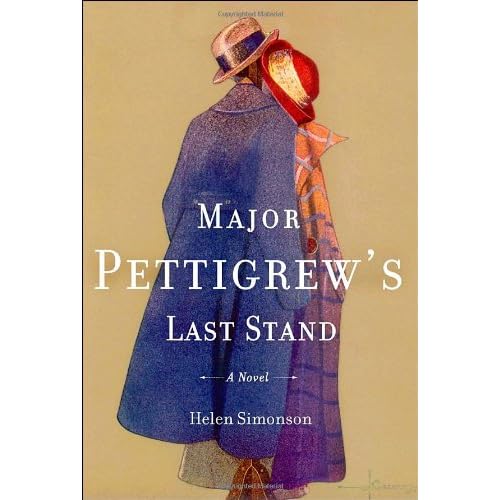
1.  Major Pettigrew's Last Stand 
by Helen Simonson

This book is just fun to read. The writing is wonderful and I found myself quoting to Lloyd some of the funnier lines. This is a feel-good book which might be important right now. It's about a retired British major who lives in a small English village and who becomes interested in the Pakistani widow of the grocer. Absolutely delightful.


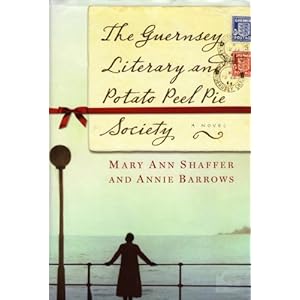
2. The Guernsey Literary and 
Potato Peel Pie Society 
by Mary Ann Shaffer

Another entry in the "delightful" category. It's the story, told in letters, of Guernsey Island, in the English Channel, that was occupied by Germans during WWII. It begins about 1946-7 and starts out quite funny, then becomes more serious as the protagonist learns more about what happened during the war. Again, the writing is amazing and it's one book you really don't want to end. Although it does have a very satisfactory ending.


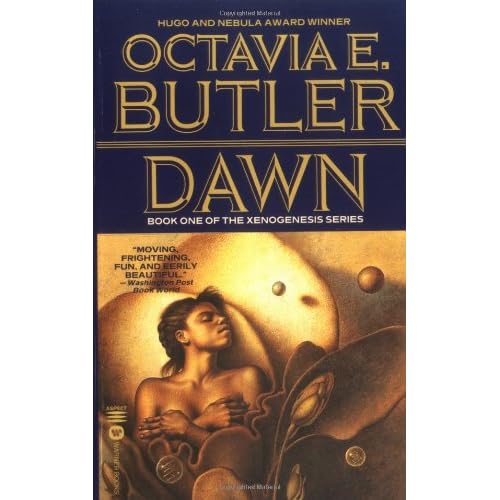
3. Dawn by Olivia Butler

For a change of pace, this is good science fiction, which is hard to find. It's about a group of humans who are rescued from the ravages of nuclear war by a race of aliens.I consider a book to be outstanding when I can't predict what will happen next and at the same time I am anxious to find out. And that describes this book.


4. A Discovery of Witches
 & Shadow of Night
 by Deborah Harkness

These are the first two of a planned trilogy and the best way to describe them is to say they are like the Twilight series but for grown-ups. They have a romance between a vampire and a human, but that is not the main part of the story. There is a lot of history and even science, which made them even more fun. 


5. Miss Buncle's Book
 by D.E. Stephenson

This is an older one that takes place in England probably in the 50's. It's another fun read, not serious, but very well-done, about a spinster who needs money and decides to write a book about the people she knows in her village. Chaos ensues.

In each of these books, as great as the story-line is, the really wonderful aspect is the characterization. They all have people you like a lot and want to spend time with. I find I won't read a book about someone I wouldn't want around for whatever reason. It's better to be with people who make you laugh or inspire you somehow, or are just plain interesting to listen to. And all these books have those kinds of people.

Sunday, October 28, 2012

Enough Politics, Now Movies & Books / Judy

In my last post, "When Lloyd& I Started this Blog," I recommended 4 lesser-known films that both Lloyd & I watched. I don't know about your lives, but it's rare that we have time together. So besides those movies that I enjoy, I'm also on the lookout for ones we'll both like. The themes and pace are more for adults than children. "The Big Miracle" from the last post would be one for the whole family.


 Here are five more films that I recommend with shared popcorn 


1. Salmon Fishing in the Yemen

This is a quirky British movie ("quirky" and "British" are often synonymous). Although it's not as funny as the trailer promises, it has more heart. It's about a visionary sheik from Yemen who wants to establish salmon fishing in his country and goes to Britain's Academy of Fisheries, or something, for help. It stars two of my favorite actors: Emily Blunt and Ewan McGregor. No subtitles of course.  Netflix DVD, not instant.


2. Best Exotic Marigold Hotel

Another British entry. This one is longish (2 hrs 5 min) and leisurely, but it builds and by the end has exerted a compelling charm. It's about several British retirees who travel to India to live in an exotic hotel that is not nearly as wonderful as the brochures describe. All their stories are interwoven around the hotel manager and you really care about these people, at least I did. Again, Netflix DVD, not instant.


3. Queen to Play

This one is French and has subtitles. It's unrated, but again it's okay. It's about a motel maid on the island of Corsica who one day sees an American couple playing chess on the balcony of their room. She becomes intrigued with the game and asks an American (Kevin Kline) to teach her the game. She becomes very good at it. In fact, she becomes so good that it changes her life and everything around her. It is available on Netflix instant.


4.  The Women on the 6th Floor (Subtitles)

A French comedy, but bear in mind their comedies are not like our comedies. You never know what's going to happen next. It's about a Parisian couple in 1960 who hire a Spanish maid. All the maids live on the 6th floor, and the husband finds he likes being up there more than in his own apartment. It's unrated, but okay. I have to warn you about one scene where the husband sees the bare back of the maid as she takes a bath in their apartment, but that's it. It is available on Netflix instant.


5. Take Me Home

This is a little gem I discovered under the Watch Instantly column on Netflix. It's obviously an indie film because I've never heard of any of the actors, but they are really good. It's a fun story about a woman in New York who hears her father is in a hospital in California, and she hires a cabby to drive her there. Turns out to be quite a road trip. Also available on Netflix instant.


And that's it, unless I see another intriguing movie I have to talk about. The next blog will be about some books I've recently enjoyed. 

Featured Post

Have a Baby / Lloyd

I was a graduate student at Yeshiva University on a fellowship with a living stipend that included my wife and children. We had two daughter...